Dune Raider Adventure
7-Day Fayoum & Western Desert Circuit: Full Oasis Expedition
7-Day Fayoum & Western Desert Circuit: Full Oasis Expedition
Couldn't load pickup availability
The full Western Desert oasis circuit, oasis to oasis
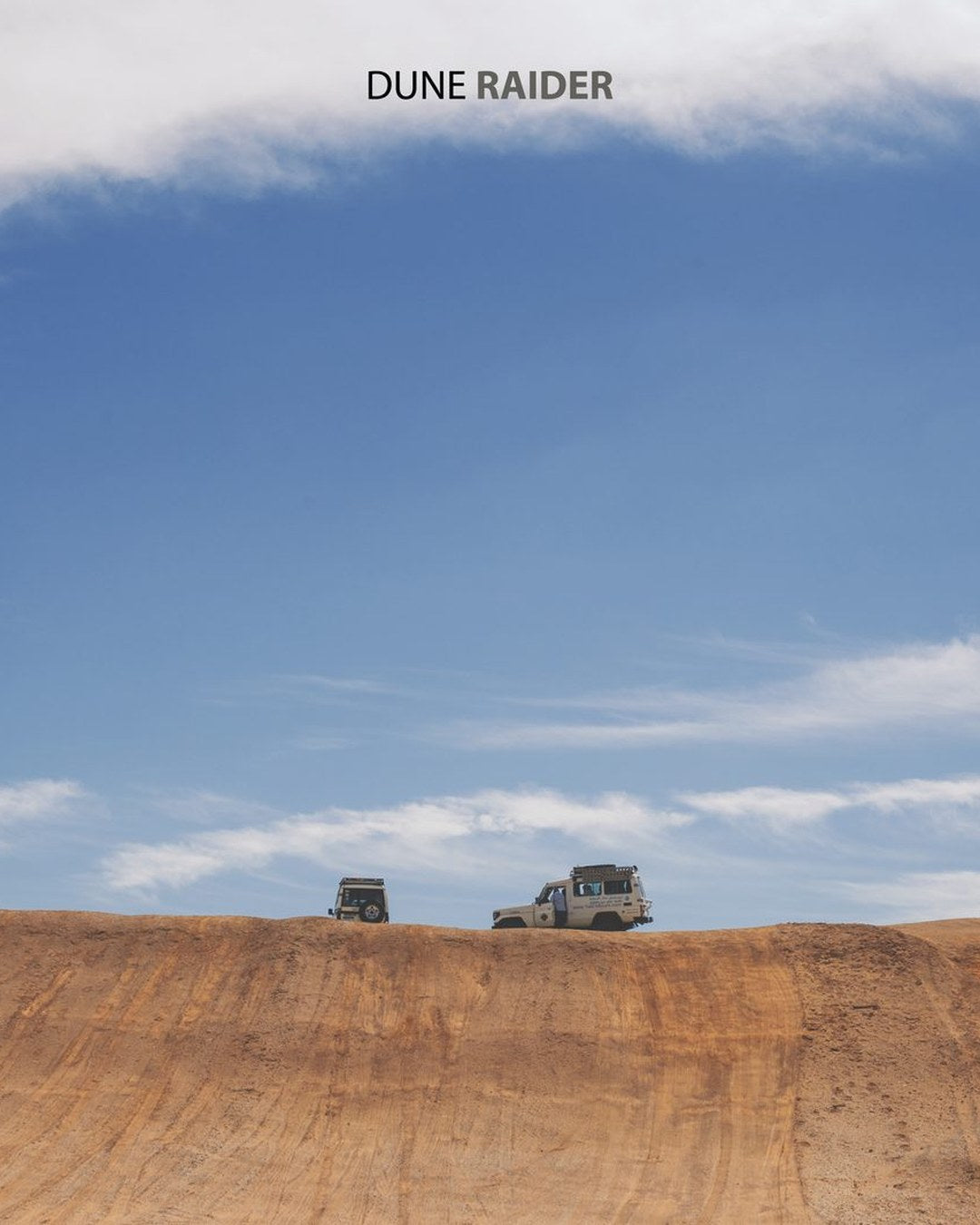
The 7-day Fayoum & Western Desert circuit is Dune Raider Adventure's longest desert-only itinerary from Cairo — six oases, roughly 1,000 kilometers of desert road, and a full night in every stop from Fayoum's whale valley to Kharga's Christian necropolis. It's built for travelers who want the entire Western Desert in one trip rather than picking a single region.
DAY 1 — Fayoum — Lakes, Fossils, and the Road Out of Cairo
The trip starts close, which is the point — Fayoum is barely two hours from Cairo, so day one covers a lot of ground without an early alarm. You'll stop at Wadi El Rayan, where two man-made lakes feed a small waterfall, Egypt's only one, then move on to Tunis Village to see potters at work on wheels their families have used for generations. Magic Lake comes next, a quiet stretch of water inside the Qarun depression where the color shifts with the light through the afternoon.
The day's last stop is Wadi El Hitan, the Valley of the Whales, a UNESCO World Heritage site where the fossilized skeletons of Basilosaurus — early whales that still had legs — lie exposed in the desert sand, proof this whole basin was seabed forty million years ago. You overnight at a Fayoum camp or lodge.
DAY 2 — On to Bahariya, by Way of Djara Cave
Leaving Fayoum, the convoy heads deeper into the Western Desert toward Bahariya Oasis. About halfway along, it stops at Djara Cave, a limestone cave that opens downward into the desert floor rather than into a mountainside. Inside are chambers hung with stalactites and floored with stalagmites, built up over tens of thousands of years while water still moved through this rock — a detour most visitors to Egypt never take.
From there it's on to Bahariya and the Black Desert, a stretch of hills dusted dark with basalt and dolerite fragments shed from long-eroded volcanic peaks. Camp goes up before sunset, dinner cooked over an open fire under a sky with none of Cairo's light pollution to compete with.
DAY 3 — White Desert, Crystal Mountain & Agabat Valley
The White Desert earns its name the moment the light comes up — chalk-white rock rises out of the sand in mushroom shapes and isolated hills geologists call inselbergs, all carved by wind erosion over millions of years from what used to be a seabed. The day moves between the White Desert and Crystal Mountain, a hill studded with calcite that catches the light differently depending on the hour, then on to Agabat Valley for a run of sandboarding before the afternoon heat sets in.
A stop at one of Bahariya's natural hot springs closes out the day. Camp goes up again in the White Desert, under a sky built for stargazing.
DAY 4 — South to Farafra
From Bahariya the road continues south to Farafra, the smallest and most isolated of Egypt's inhabited oases. The stop here is Ain Khodra, a natural spring, and the Badr Museum, a small folk-art museum built and run by a local artist documenting Farafra life in painting and sculpture. A hot spring soak rounds out the afternoon before the overnight stay in Farafra.
Farafra sits at the edge of the White Desert proper, and its isolation is part of the point on this route — it's the quietest stop of the seven days, with a fraction of the visitors Bahariya sees.
DAY 5 — Dakhla — Painted Tombs and a Roman Temple
Dakhla is a bigger oasis than Farafra, with a longer settled history to show for it. The Muzawaka tombs hold painted burial chambers from the Roman period, still showing color on the ceiling and wall plaster. Deir el-Hagar is a sandstone temple from the same era, dedicated to the Theban triad of gods and restored enough that its columns and roof blocks are still readable as a building rather than a ruin.
Al-Qasr, Dakhla's old Islamic-era town, is a warren of mudbrick houses and covered lanes built to stay cool in the heat — parts of it are still standing from the twelfth century. A hot spring stop closes the day before the overnight in Dakhla.
DAYS 6–7 — Kharga, Then the Long Drive Home
Kharga is the largest of the New Valley oases and the last stop before turning back. The Kharga Museum of Antiquities holds finds from across the oasis's pharaonic, Roman, and Christian layers. Bagawat is a Christian necropolis of mudbrick funerary chapels dating from the fourth to sixth centuries — one of the oldest surviving Christian cemeteries anywhere, still largely intact. Qasr El-Ghueita is a fortress-temple built around a Twenty-Fifth Dynasty sanctuary, its mudbrick walls rising straight out of the surrounding palm groves. Overnight in Kharga.
Day seven is the return drive to Cairo, or an onward connection to Luxor if you're extending the trip. Either way, seven days and roughly a thousand kilometers of desert road end here.
Price Includes
- 4x4 transport, Cairo–Fayoum–Bahariya–Farafra–Dakhla–Kharga–Cairo
- Professional desert guide and driver throughout
- 6 nights camp / lodge accommodation
- Meals as specified in the itinerary
- Sandboarding equipment
- Hot spring access at each stop where available
- Entry fees for museums and sites listed above
Does Not Include
- International or domestic flights
- Travel insurance
- Personal expenses and gratuities
- Any items not listed under Includes
Price
$1,750 USD / €1,498 EUR / 89,028 EGP per person. Indicative rate at today's exchange rate — contact us to confirm current pricing for your group and season.
Share